

What to Wear and What to Bring to Stonehenge (2026 Guide)
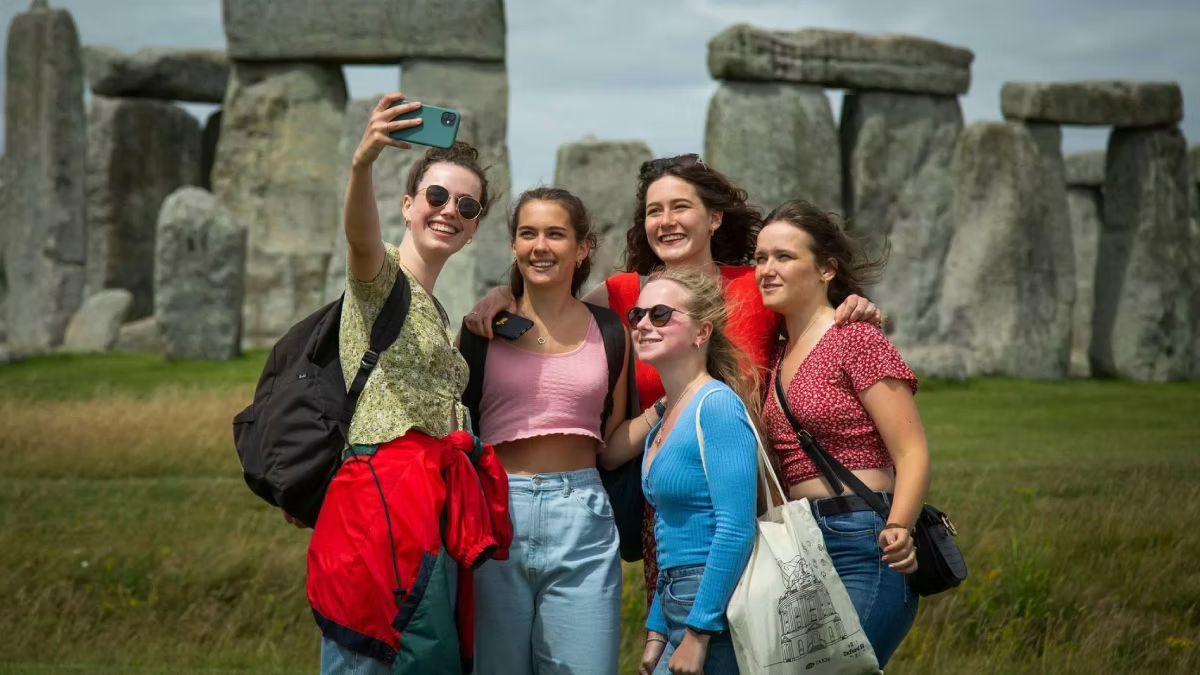
The most important things to bring to Stonehenge are: comfortable walking shoes or boots, a waterproof layer (year-round), warm layers (even in summer), a small backpack, water, sunscreen (summer), and your pre-booked ticket. Stonehenge sits on exposed open downland with no natural shelter at the stone circle — the weather can change quickly regardless of the season. There is no left luggage facility, so bring only what you need for the visit.
Stonehenge is entirely outdoors on open chalk downland, with no shelter at the stone circle and conditions that can shift from warm sunshine to cold rain within an hour. Preparation makes the difference between a comfortable, enjoyable visit and a memorable one for the wrong reasons. This guide covers exactly what to wear and what to bring for every season.
The Golden Rules for Stonehenge Clothing
Rule 1: Layers, not heavy single garments. Wiltshire weather changes quickly. A morning that starts cold may warm significantly by noon; a sunny afternoon can turn windy within minutes on exposed Salisbury Plain. Layering lets you adapt without being uncomfortable at either extreme.
Rule 2: Always bring a waterproof. This applies in every season. Summer showers arrive without much warning on the plain. A light packable rain jacket weighs almost nothing and can completely rescue a visit that would otherwise be miserable.
Rule 3: Wear proper walking shoes. The circular viewing path around the monument is gravel and compacted surface, but it connects via grass and uneven ground. If you choose to walk from the Visitor Centre rather than taking the shuttle, the route crosses open grassland for approximately 1.3 km each way. Trainers are fine; heels and dress shoes are not.
Rule 4: Plan for wind. Salisbury Plain is exposed and elevated. Even on a calm day in London, wind at Stonehenge can be surprising. A windproof outer layer (a light jacket with some wind resistance) is more useful than a heavy coat with no wind resistance.
What to Wear by Season
Spring (April–June)
- Base layer (light long-sleeved top or T-shirt)
- Mid-layer (fleece or light jumper)
- Waterproof outer layer (essential — April and May can be showery)
- Trousers or comfortable jeans (shorts are fine in May–June if warm but bring backup)
- Walking shoes or light hiking boots
- Sun hat and sunscreen for clear days (spring sun can be surprisingly strong)
- Sunglasses
Summer (July–August)
- Light breathable top (T-shirt or light shirt)
- Light layer (thin long-sleeved top or lightweight cardigan for cloud cover and wind)
- Compact packable rain jacket (summer showers are common and brief)
- Comfortable trousers, shorts, or a skirt — whatever is comfortable for walking
- Walking shoes or comfortable trainers (avoid flip-flops or sandals on gravel paths)
- Sun hat — the monument is fully exposed; no shade at the stone circle
- Sunscreen — reapply before the walk to the stones
- Sunglasses
Summer tip: even in July and August, a light layer is advisable. The wind on Salisbury Plain is noticeable, and the temperature drops quickly if cloud arrives.
Autumn (September–October)
- Warm base layer (long-sleeved top)
- Mid-layer (fleece, jumper, or light down jacket)
- Waterproof outer layer (essential — autumn rain is frequent)
- Comfortable trousers
- Waterproof or water-resistant walking shoes or boots
- Hat (warm, not sun hat)
- Gloves (October can be surprisingly cold on the plain)
Winter (November–March)
- Warm base layer (thermal or merino wool)
- Thick mid-layer (down jacket or heavy fleece)
- Windproof and waterproof outer layer (critical — winter wind at Stonehenge is sharp)
- Warm trousers (jeans are fine but cold when wet; waterproof walking trousers are better)
- Waterproof walking boots with grip
- Warm hat covering the ears
- Gloves
- Scarf
- Thick socks
Winter note: English Heritage’s own guidance for the winter solstice event specifies “warm clothing as the weather at Stonehenge can be very cold and damp.” This applies to all winter visits, not just the solstice.
Footwear Guide
Best: Comfortable walking shoes or light hiking boots with a grippy sole. These work for the Visitor Centre, the shuttle bus, the stone circle viewing path, and the landscape walk.
Good: Comfortable trainers with a non-slip sole. Fine for the standard visit path in dry conditions.
Acceptable: Waterproof walking trainers if rain is forecast.
Not recommended: Heels, dress shoes, or smooth-soled loafers. The gravel path at the stone circle and the grassed areas around the Visitor Centre can be uneven, and wet grass is slippery.
Not recommended: Flip-flops or sandals. The gravel path, wind, and potential wet grass all make open footwear uncomfortable.
What to Bring: The Stonehenge Packing List
Essential
- Pre-booked Stonehenge ticket (on your phone or printed — the Visitor Centre needs to scan or view it)
- Waterproof jacket or rain layer (year-round essential)
- Comfortable walking shoes (already wearing these)
- Water — there is a café at the Visitor Centre but nothing at the stone circle; bring a bottle
- Pay By Phone app (if driving — the only way to pay for car parking)
- Warm layer (even in summer)
Strongly Recommended
- The Stonehenge Audio Tour app (free, 12 languages — download before leaving home on a reliable Wi-Fi connection; saves time and data on site)
- Sunscreen and hat (spring through autumn)
- Sunglasses
- Small backpack or day bag (to carry water, layers, and other items — the Visitor Centre has no left luggage)
- Camera (phones are fine; a compact camera is an upgrade; a DSLR or mirrorless camera with a wide-angle lens produces the best stone circle shots in any light condition)
Useful Optional Extras
- Binoculars (useful for examining the top of the lintels and the landscape details from the viewing path)
- Packed lunch or snacks (the café is good but can be busy at peak times; picnicking in the monument field is permitted)
- Walking map (available from the gift shop; the 1:10,000 OS map of the Stonehenge and Avebury World Heritage Site shows the landscape monuments)
- Headphones (for use with the audio guide app — the Visitor Centre sells headphones for £2 if you forget yours)
What to Leave at Home
Large bags and suitcases. There is no left luggage or cloakroom at Stonehenge. Do not bring luggage you would need to manage while walking around the monument. Only small backpacks are permitted in the monument field.
Selfie sticks. Not prohibited, but extremely unpopular with other visitors and impractical on the viewing path.
Drones. Strictly prohibited at Stonehenge. Flying a drone over or near the site is not permitted under any circumstances.
Dogs (in most areas). Dogs are welcome in the Visitor Centre grounds but not on the shuttle bus, not in the Visitor Centre exhibition, and not in the field around the stone circle. If you bring a dog, you will be unable to take the shuttle or access the monument field. Assistance dogs are welcome throughout the site.
Large umbrellas. Small umbrellas are fine; large or golf umbrellas are not suitable for the narrow viewing path and can obstruct other visitors.
Food and drink at the stone circle. You can bring food and eat at designated picnic areas near the Visitor Centre and in the monument field, but not at the stone circle viewing path itself.
Specific Considerations for Inner Circle Visits
If you have booked the Stone Circle Experience or an inner circle tour, the timing is dawn or dusk — adding cold and low light to the standard considerations.
- Wear more layers than you think you need — the stones are on open ground, and standing still in the inner circle for an hour in the early morning or evening is significantly colder than walking around the daytime path
- Bring a camera with low-light capability — this is the photographic event of the Stonehenge visit, and good equipment makes a real difference
- Bring a small torch if visiting at dawn — the walk from the coach to the shuttle and from the shuttle to the stones may be in low light
Frequently Asked Questions
Do I need walking boots for Stonehenge?
Not strictly — comfortable trainers are fine for the standard visit. If you plan to walk the landscape (rather than take the shuttle) or if there is a risk of rain, boots or waterproof walking shoes are better.
Is there a dress code at Stonehenge?
No formal dress code. Visitors should dress practically for outdoor conditions. There is no religious site formality required.
Can I bring food and drink?
Yes. You can bring a packed lunch and eat in the designated picnic areas near the Visitor Centre and in the monument field. Food and drink are not permitted on the stone circle viewing path. The café at the Visitor Centre serves hot and cold food and drink.
What is the weather like at Stonehenge?
Variable at all times of year. Salisbury Plain is open downland exposed to wind from every direction. Summer temperatures reach 20–25°C on sunny days but wind chill and sudden showers are common. Winter temperatures are 2–8°C and often feel colder in the wind. The best weather planning tool is the forecast for Amesbury (the nearest town) rather than London or Salisbury.
Can I bring a buggy or pram?
A buggy can be taken through the Visitor Centre, but the path from the Visitor Centre to the stone circle involves uneven ground that is difficult with a pushchair. The shuttle bus is accessible, though a compact buggy is easier to manage. A baby carrier is recommended as an alternative for very young children.
