

How Long to Spend at Stonehenge
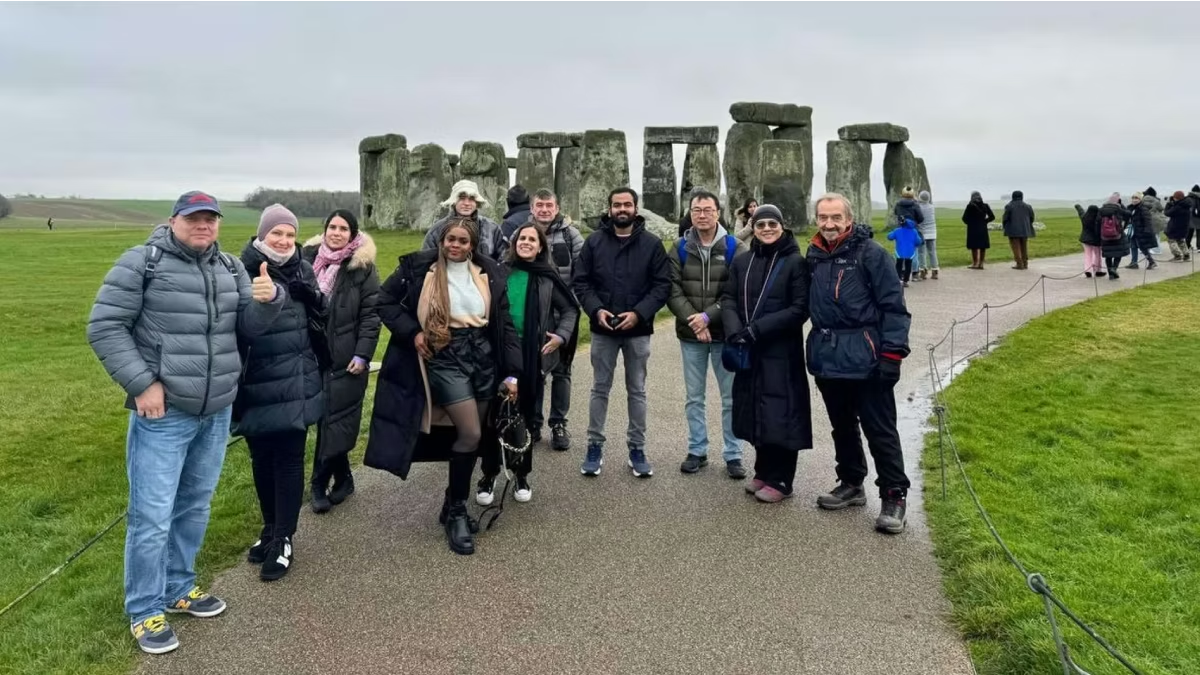
Most visitors spend 1.5 to 2 hours at Stonehenge — enough time for the stone circle viewing path, a visit to the Visitor Centre exhibition, and the Neolithic houses. This is the standard allocation on London day tours. Visitors who want to explore the wider prehistoric landscape and walk rather than shuttle can easily spend 2.5–3 hours. There is no time limit once you have checked in; you can stay until closing time.
How long is enough at Stonehenge? It is a genuine question — and the honest answer depends on what you want from the visit. Someone who wants to stand in front of the stones, take photographs, and move on needs far less time than someone who wants to understand the monument’s archaeology, explore the Visitor Centre, and walk the landscape. This guide gives you the numbers for each scenario.
The Standard Visit: 1.5–2 Hours
For most visitors, 1.5 to 2 hours is the right planning figure. This is what English Heritage itself suggests, and it is the time most London day tours allocate at the site. Within this window, you can comfortably cover:
- Arrival at the Visitor Centre and check-in (5–10 minutes)
- Shuttle bus to the stones (5–10 minutes) or start of the walk
- The full circular viewing path around the monument (30–40 minutes at a relaxed pace)
- Return by shuttle (5 minutes) or completion of the walk
- Visitor Centre exhibition (30–45 minutes for the highlights)
- Neolithic houses (10–15 minutes)
- Brief café or gift shop stop (10–15 minutes if desired)
This schedule is efficient but not rushed. If you want to use the audio guide properly, take photographs without feeling hurried, and read the exhibition panels rather than glancing at them, the higher end of the 1.5–2 hour range is more realistic.
The Thorough Visit: 2.5–3 Hours
Visitors with genuine interest in Stonehenge’s archaeology, history, or the wider landscape benefit from 2.5 to 3 hours. The additional time accommodates:
A proper walk through the landscape. Rather than taking the shuttle, walking from the Visitor Centre to the stones (approximately 1.3 km each way) takes you through a National Trust-managed prehistoric landscape containing burial mounds, earthworks, and broad views of the Wiltshire plain. The walk takes approximately 20–25 minutes each way and provides a meaningfully different perspective on the monument’s setting than the shuttle bus affords.
The Visitor Centre exhibition in depth. The exhibition contains over 250 archaeological objects found in and around Stonehenge — Neolithic tools, Bronze Age metalwork, cremated human remains, and interactive displays covering how the monument was built and theories about its purpose. Spending 45–60 minutes here rather than 30 rewards the interest.
The audio guide in full. The Stonehenge Audio Tour app covers 12 named stopping points around the circular path. Using it properly — pausing at each location, listening to the relevant commentary, and looking at the stones as described — takes approximately 45–60 minutes at the monument rather than 30.
The Deep Visit: 3+ Hours
Visitors who want to walk the wider National Trust landscape beyond the monument itself can spend considerably longer. The landscape surrounding Stonehenge contains:
- The Avenue — the ceremonial approach road to the monument, visible as a pair of parallel earthworks running towards the north-east
- Numerous Bronze Age round barrows (burial mounds) on the surrounding ridges — the King Barrows are a particularly fine group to the north-east
- The Cursus — a long Neolithic earthwork monument running approximately 3 km east-west north of Stonehenge
- Views across the open chalk downland in every direction
A walking map of the landscape is available from the Visitor Centre gift shop (Ordnance Survey 1:10,000 base). English Heritage provides free orientation leaflets showing the main visible features. Walking the landscape takes as long as you want to give it — half a day is entirely reasonable for walkers.
How Much Time Is Allocated on Day Tours?
If you are visiting Stonehenge as part of a London day tour, your time at the site is fixed by the tour schedule. Here is what to expect:
| Tour Type | Time at Stonehenge |
|---|---|
| Half-day express | ~2 hours |
| Two-stop day tour (e.g. Stonehenge & Bath) | ~1.5–2 hours |
| Three-stop day tour (e.g. Windsor, Stonehenge, Bath) | ~1–1.5 hours |
| Inner circle access tour | ~1 hour inside the circle (outside normal hours) |
| Small-group tours | ~1.5–2 hours |
On a two-stop tour, 1.5–2 hours is usually sufficient for a satisfying experience. On a three-stop tour, the shorter time at Stonehenge is a trade-off for the additional destinations — visitors who find this too brief often consider returning on a future trip for a more focused visit.
What Takes the Most Time?
Three elements eat time at Stonehenge in ways visitors often underestimate:
Photography. Getting a photograph of the stones without other visitors in the frame requires patience, particularly during busy periods. This is not impossible, but it takes time. If photography is a priority, factor in an extra 15–20 minutes beyond the standard circuit.
The Visitor Centre exhibition. It is genuinely excellent and takes longer than most visitors expect. People who plan 30 minutes often find themselves spending 45 minutes without noticing.
The walk versus the shuttle. Choosing to walk rather than shuttle adds approximately 30–40 minutes to the overall visit. This is time well spent — but plan for it.
What Can You Skip If Time Is Short?
If you have less than 1.5 hours, prioritise:
- The stone circle viewing path — this is the reason you came
- A brief look at the Neolithic houses — they take 10 minutes and are worth it
- The audio guide at the stones (download in advance)
Skip or abbreviate:
- The full Visitor Centre exhibition — you can return another time, and the stones are the main event
- The gift shop — browse online if you want specific items
Tips for Making the Most of Your Time
Arrive at your booked slot time. If you arrive late and your slot is full, you may wait for the next available window — losing 30 minutes of your planned visit.
Shuttle on the way out, walk on the way back. Many visitors take the shuttle to the stones for efficiency and then walk back at leisure, seeing the landscape as they return to the Visitor Centre. This is a good compromise between efficiency and engagement.
Do the audio guide at the stones, not the exhibition. The audio guide is most valuable at the monument itself, where it directs your attention to specific stones and features. Save independent reading for the exhibition.
In summer, spend longer at the stones in the morning light. The overcast English sky means good photography conditions for most of the day, but morning light is most flattering on the chalk and sarsen surfaces.
Frequently Asked Questions
Is 2 hours enough at Stonehenge?
For most visitors, yes — 2 hours covers the stone circle, a good portion of the Visitor Centre, and the Neolithic houses without rushing. If archaeology is a serious interest, 2.5–3 hours is better.
Is there a time limit once you enter?
No. Once you have checked in at your booked time slot, you can stay until the site closes. There is no maximum stay.
Can you see Stonehenge in less than an hour?
You can walk the circular viewing path in approximately 30–40 minutes, but you will not have time for the Visitor Centre or Neolithic houses. An hour is the realistic minimum for a worthwhile visit; 1.5 hours is better.
Is the Visitor Centre worth visiting?
Yes — it adds significantly to the experience. The archaeological collection is exceptional for a site exhibition, and the interactive displays on construction methods and the monument’s phases help visitors understand what they have seen at the stones. Allow 30–45 minutes.
Should I walk or take the shuttle?
Both are valid. The shuttle is faster (5–10 minutes) and accessible. Walking (20–25 minutes each way) gives you a much better sense of the monument’s prehistoric landscape and is recommended for visitors with time.
