

Inside the Stonehenge Visitor Centre: What to See & How to Make the Most of It
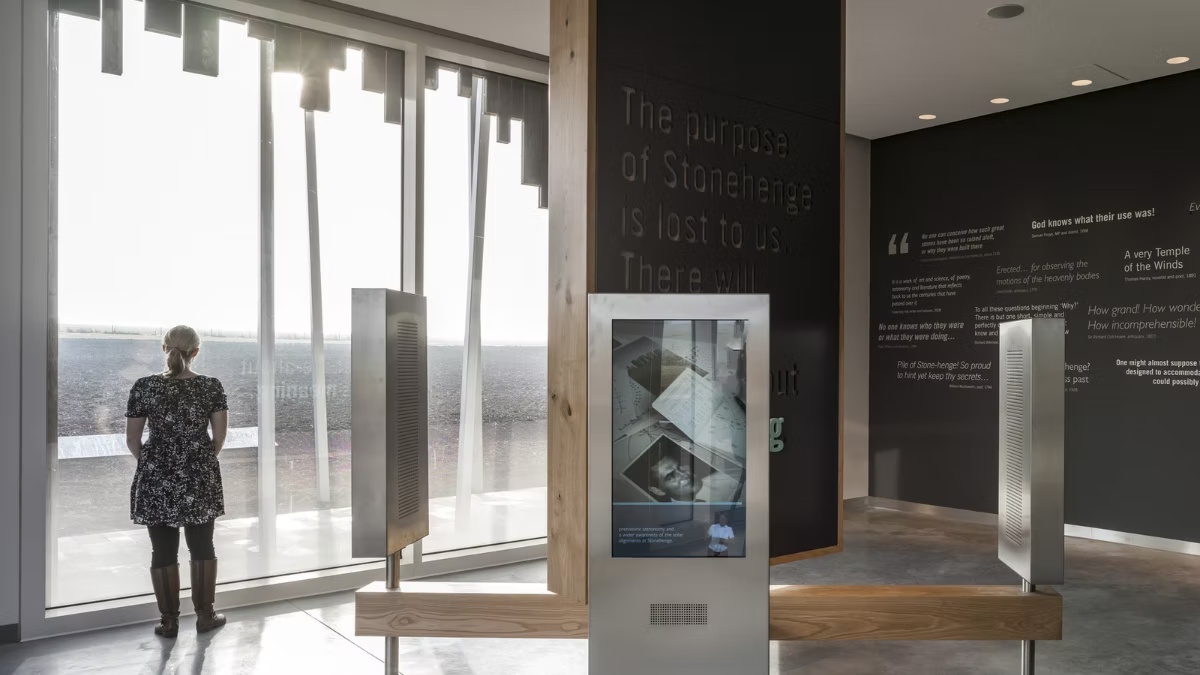
The Stonehenge Visitor Centre, opened in 2013, is approximately 1.5km from the stone circle. It includes a permanent exhibition of over 250 archaeological objects (on loan from Salisbury Museum and Wiltshire Museum), a 360-degree audio-visual theatre showing the stone circle across the seasons, reconstructed Neolithic houses, a 110-seat café, and a gift shop. All are included with standard admission. The café and shop are free to use without an admission ticket.
The Stonehenge Visitor Centre is not merely a place to buy a ticket and catch the shuttle. It is a world-class museum space that substantially enriches the monument experience — and for visitors who engage with it properly, it transforms the stone circle from a ring of impressive rocks into the final stage of one of the most extraordinary human engineering projects of the prehistoric world.
Background: The Visitor Centre
The Stonehenge Visitor Centre opened in December 2013, replacing a series of inadequate visitor facilities that had been criticised for decades. The new building cost approximately £27 million and was designed by the firm Denton Corker Marshall. It sits approximately 1.5 kilometres from the stone circle — far enough to protect the monument’s setting but close enough that the shuttle bus journey is short.
The building has been awarded a Silver Green Impact Award for its environmentally sensitive design, which incorporates natural ventilation, borehole water systems, and energy-efficient heating. From certain angles it is almost invisible against the landscape — a deliberate design choice to minimise the building’s visual impact on the UNESCO World Heritage Site.
The Exhibition
The main exhibition space is the centrepiece of the Visitor Centre. It contains over 250 archaeological objects found in and around Stonehenge and the wider World Heritage landscape — objects on loan from Salisbury Museum and Wiltshire Museum in Devizes.
Key elements of the exhibition:
The 360-degree audio-visual theatre. At the heart of the exhibition is an immersive circular screen showing the stone circle in a time-lapse across the seasons — dawn and dusk, midsummer and midwinter, frost and sunshine. This experience gives visitors a sense of the monument’s astronomical alignments and its changing relationship with the Salisbury Plain landscape across time. It runs on a short loop and can be watched more than once.
The reconstructed face of a Neolithic man. English Heritage has displayed a forensic reconstruction of the face of a man who lived approximately 5,500 years ago, based on his bones found near Stonehenge. This is among the most powerful individual elements of the exhibition — giving the monument’s builders a specific, human face.
Archaeological objects. The exhibition displays objects spanning thousands of years of human activity in the Stonehenge landscape:
- Neolithic tools including flint axes, scrapers, and hammerstones used in Stonehenge’s construction
- Bone pins, antler picks, and organic materials from the construction period
- Bronze Age pottery and metalwork, including beautifully decorated Beaker pottery associated with the monument’s later phases
- Personal ornaments including gold items associated with the wealthy burials in the surrounding barrows
- Human remains — cremated bones and, in some cases, skeletal material — that represent the individuals buried at Stonehenge over its centuries as a cemetery
Interactive exhibits. Children and adults can try their strength against a replica sarsen, handle replica stone-working tools, and explore interactive displays on construction techniques.
Timeline panels and 3D models. Large displays provide a chronological framework for the monument’s 1,500-year construction history, connecting Stonehenge to the wider prehistoric landscape and to contemporary monuments in Europe and beyond.
Construction methods display. Full-scale replicas of tools and construction aids — including wooden sledges, ropes, and levers — demonstrate the methods by which the stones were transported and raised. This section is particularly popular with children and engineering-minded visitors.
The Neolithic Houses
Just outside the Visitor Centre, five thatched houses have been reconstructed to represent the homes of the people who lived near Stonehenge during its construction around 2500 BCE. These are based on actual archaeological remains — the remains of similar houses have been found at Durrington Walls, the nearby settlement where Stonehenge’s builders are believed to have lived.
Each house is approximately 5 metres across and furnished with wooden and woven interior fittings based on archaeological evidence: a central hearth, wooden sleeping platforms, clay pots, and stored grain. English Heritage volunteers are often present to demonstrate Neolithic crafts, cooking methods, and daily life, and to answer questions about how people lived when Stonehenge was built.
The Neolithic houses take approximately 10–15 minutes to explore but reward time and attention — particularly for visitors with children, for whom the tangible, human scale of the buildings is more immediately accessible than the monument itself.
The Café
The 110-seat café serves hot and cold food and drinks throughout site hours. The menu emphasises locally sourced produce and includes hot meals, sandwiches, soups, pasties, salads, and sweet treats. English Heritage’s famous rock cakes are the signature item. Ice cream is served seasonally from Marshfield’s, a local producer.
The café also serves hot breakfasts before some Stone Circle Experience sessions (for visitors arriving at dawn). Both indoor and outdoor seating is available. The outdoor terrace has views to the west across the Wiltshire landscape.
No admission ticket is required to use the café.
The Gift Shop
The gift shop offers a wide range of Stonehenge-specific merchandise, including books, souvenirs, jewellery, and clothing — many items made in the UK and designed exclusively for Stonehenge. A children’s pocket money range includes small items from approximately £1–£5.
No admission ticket is required to visit the gift shop.
Temporary Exhibitions
In addition to the permanent exhibition, English Heritage hosts regular temporary special exhibitions in the Visitor Centre. These rotate throughout the year and cover various aspects of Stonehenge research, archaeology, and history. Check the English Heritage website in advance to see what is currently showing.
How to Get the Most from Your Visitor Centre Visit
Visit the exhibition before the stones, not after. The most common visitor mistake is to rush to the shuttle bus on arrival and save the exhibition for the return. The exhibition provides context that makes the stone circle more meaningful. Visitors who explore the exhibition first consistently describe a more rewarding experience at the monument.
Allow 45–60 minutes for the exhibition. The space is large enough that 30 minutes feels rushed. If the 360-degree theatre is playing, watch it through once — it takes approximately 5 minutes per cycle.
Talk to English Heritage volunteers. Staff and volunteers at the Visitor Centre and Neolithic houses are knowledgeable and enthusiastic. They can provide information about recent archaeological discoveries — including research published since the exhibition was last updated — that the permanent displays do not cover.
Download the Stonehenge Audio Tour app before arrival. The app (free, 12 languages) is the audio guide for the stone circle, not the Visitor Centre. Download it before your visit and have it ready on your phone for the monument walk.
Visit the Neolithic houses. Many visitors walk past these without stopping. They are free to explore, often have live demonstrations, and give children an especially tangible connection to the people who built Stonehenge.
Use the toilets before the shuttle. There are no toilets at the stone circle. The Visitor Centre has comprehensive accessible toilet facilities including a Changing Places room. Use them before boarding the shuttle bus.
Practical Information
- Location: Approximately 1.5km from the stone circle; the shuttle bus and walking route both depart from the Visitor Centre
- Opening hours: Same as the site (9:30am–5pm in winter; 9:30am–6pm in summer); closed 25 December
- Admission: Included with standard Stonehenge admission ticket. Café and gift shop are free to all without a ticket.
- Accessibility: Fully accessible — step-free throughout, wide entrances, low-level display cases, hearing loops, BSL-adapted materials, Changing Places toilet
Frequently Asked Questions
Is the Stonehenge Visitor Centre included with admission?
Yes — the exhibition, Neolithic houses, shuttle bus, and audio guide are all included in the standard admission ticket.
Can I visit the Visitor Centre without a Stonehenge ticket?
Partially — the café and gift shop are free and open to all. The exhibition and Neolithic houses require a valid admission ticket.
Is the Visitor Centre worth visiting?
Yes — it is one of the better site-specific archaeological museums in England. The collection of over 250 objects spans thousands of years and the 360-degree audio-visual experience is genuinely immersive. Visitors who engage with the exhibition consistently rate the overall Stonehenge experience more positively.
How long should I spend at the Visitor Centre?
Allow 45–60 minutes for the exhibition and Neolithic houses. Many visitors spend longer. The café adds optional time.
Is there a café at Stonehenge?
Yes — the 110-seat café in the Visitor Centre serves hot and cold food and drinks. It is free to use without an admission ticket.
