

Stonehenge in Winter vs Summer: Which Is Better?
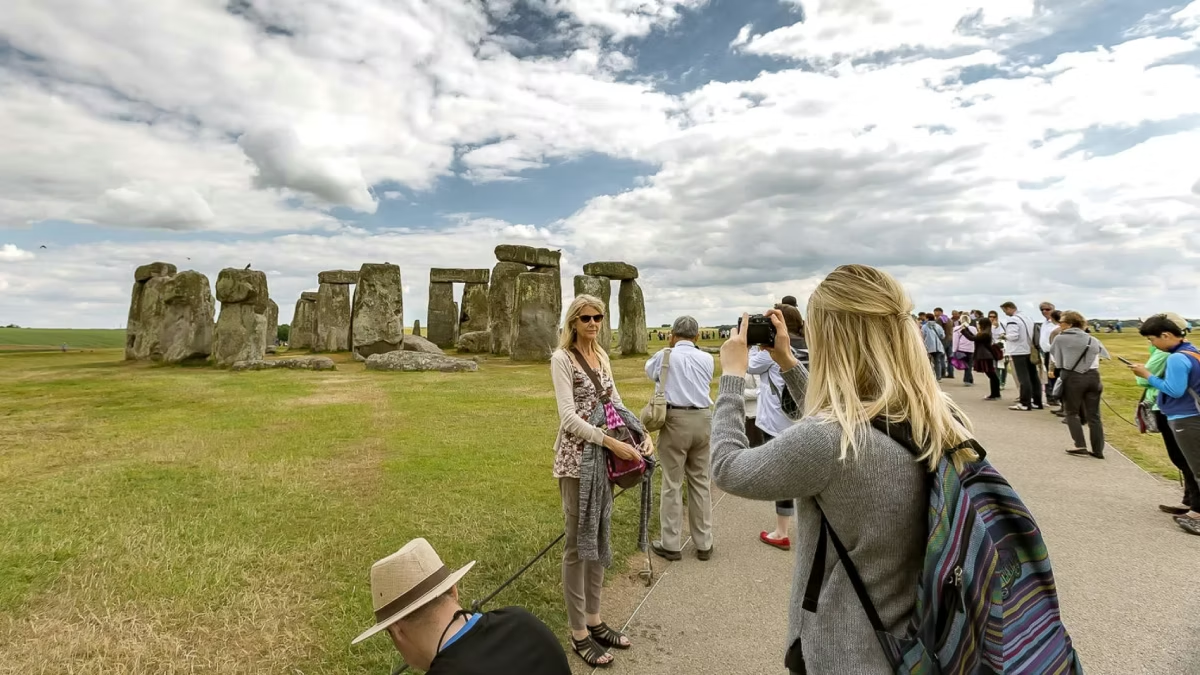
Both summer and winter offer distinct and valid Stonehenge experiences. Summer has longer opening hours, warmer weather, and the summer solstice — but is significantly more crowded, particularly July and August. Winter is far quieter, more atmospheric on clear days, cheaper to visit, and offers the winter solstice alignment — but has shorter hours (closing 5pm, last entry 3pm) and a higher chance of cold and wet conditions. For most visitors without a specific seasonal motivation, spring (April–June) and early autumn (September–October) offer the best balance.
“Should I go in summer or winter?” is one of the most common questions visitors ask about Stonehenge, and the honest answer is: it depends entirely on what you want. This guide sets out a clear comparison on every dimension that matters.
The Core Difference
Stonehenge in summer is bright, warm, and busy. You share the viewing path with a steady flow of other visitors, the café is animated, and the surrounding plain is green and often brilliant against a blue sky. The monument looks magnificent.
Stonehenge in winter is quiet, stark, and occasionally dramatic. On a clear December or January day, the stones rise from a grey-green plain under a large sky, with few other visitors visible on the path. The monument looks ancient in a way that a crowded summer visit does not quite convey.
Neither experience is inferior. They are genuinely different.
Crowds
Summer (June–August): High — and the highest in July/August
July and August see Stonehenge’s peak visitor numbers. Multiple London day tours arrive simultaneously during the 11am–3pm window, and the circular viewing path fills. Weekends are more crowded than weekdays; midday is more crowded than morning or late afternoon.
Winter (November–March): Low — very low outside solstice dates
January, February, and most of December are among the quietest months of the year at Stonehenge. You can often stand on the viewing path with only a handful of other visitors visible. The winter solstice (approximately 21–22 December) is the exception — this brings a crowd of thousands for the free access event.
The verdict: Winter wins comfortably on crowd levels, outside of the solstice.
Weather
Summer: Temperatures typically 18–25°C. The most reliably dry and warm period. However, Salisbury Plain is exposed and windswept even in summer — sunscreen and a light layer are still advisable.
Winter: Temperatures typically 2–8°C, with wind chill making it feel colder. Rain and fog are common. The site has no shelter at the stone circle itself. A wet winter visit on a grey day is not unpleasant exactly, but it is markedly less comfortable than summer.
The verdict: Summer wins on weather, but winter is manageable with appropriate clothing.
Opening Hours
Summer (28 March–6 September 2026): 9:30am–6pm, last entry 4pm. The longer hours are a genuine advantage — late afternoon visits in summer light are excellent, and the extended last entry means more flexible scheduling.
Winter (1 Jan–27 Mar and 7 Sep–16 Mar 2027): 9:30am–5pm, last entry 3pm. The shorter hours impose real constraints: the last entry at 3pm means any visitor who arrives after mid-afternoon will have a truncated experience. For visitors travelling from London, this is a significant planning consideration on a day tour.
The verdict: Summer wins on opening hours.
Light and Photography
Summer: High overhead sun for most of the day. Beautiful early morning and late evening light, but midday light is flat and harsh for photography. Summer solstice dawn delivers the most celebrated light of the year at Stonehenge.
Winter: Low sun angle throughout the day. Even at noon, the sun is low enough to cast long shadows across the sarsens. On a clear winter day, the light quality at Stonehenge is exceptional — warm, directional, and dramatic. Professional photographers frequently cite winter visits as producing their best Stonehenge images.
The verdict: Winter wins on photography quality (weather permitting). Summer wins on reliability.
Atmosphere
Summer: Vibrant and social. The café is busy, families with children animate the Visitor Centre, and the surrounding plain has the feel of an active, living heritage site. The summer solstice transforms this further — the free access event is one of the most distinctive annual experiences in England.
Winter: Quiet and contemplative. The stones are more prominent against a sparse landscape. The winter solstice draws a very different crowd from the summer one — mostly those with a genuine relationship to the monument’s seasonal significance. On a non-solstice winter weekday, you may have long stretches of the viewing path effectively to yourself.
The verdict: Subjective — summer is livelier; winter is more atmospheric. Choose based on what you value.
Ticket Prices
English Heritage uses peak, standard, and off-peak pricing. Summer weekends are peak-priced; winter weekdays are off-peak. Booking online in advance saves approximately 15% regardless of season.
Summer adults: £27–£29 on peak weekends
Winter adults: £22–£25 on weekday off-peak
The verdict: Winter is cheaper.
The Solstices
Summer Solstice (approximately 21 June): Free access overnight and at dawn for the general public. Thousands gather to watch the midsummer sunrise through the Heel Stone alignment. The most famous and most crowded annual Stonehenge event.
Winter Solstice (approximately 21–22 December): Also free access, but smaller and more intimate than the summer version. Archaeologically, the winter solstice sunset alignment is arguably the monument’s primary astronomical orientation. The atmosphere is cold, quiet, and genuinely moving.
For visitors motivated by the monument’s astronomical significance, the winter solstice is in some ways the more faithful Stonehenge occasion.
Who Should Visit in Summer?
- Families with young children (warmer, longer day, café busiest and most animated)
- Visitors for whom comfortable weather is a priority
- Anyone who specifically wants the summer solstice experience
- Visitors combining Stonehenge with Bath, Salisbury, or other south-west destinations where warmer weather matters
- First-time visitors who want the full site experience without weather risk
Who Should Visit in Winter?
- Visitors who specifically want a quiet, contemplative experience
- Photographers — the winter light on clear days is exceptional
- Anyone interested in the winter solstice alignment and its significance
- Visitors on a tighter budget (lower ticket prices, no peak surcharges)
- Those who find crowds at heritage sites genuinely disruptive to the experience
- Repeat visitors who have done a summer visit and want to see Stonehenge differently
The Best Compromise: Shoulder Seasons
For most visitors without a specific summer or winter motivation, April–June and September–early October are the sweet spots. These months combine:
- Weather good enough for a comfortable outdoor visit
- Crowds significantly below summer peak
- Reasonable opening hours
- Soft morning and evening light suitable for photography
September in particular is consistently praised by experienced Stonehenge visitors. The summer crowds have passed, the light is warm and low-angled, and the autumn equinox (approximately 22–23 September) adds seasonal resonance.
Frequently Asked Questions
Is Stonehenge worth visiting in winter?
Yes — particularly on a clear day. The low visitor numbers, dramatic light, and authentic atmosphere of an exposed prehistoric monument in a winter landscape create an experience that summer visits do not replicate. The constraints are shorter opening hours and potentially cold and wet conditions.
What is the worst time to visit Stonehenge?
July and August on a weekend, between 11am and 3pm. This is peak crowding at its most concentrated. If visiting in summer, offset it by arriving at 9:30am.
Is summer or winter better for photographs?
Winter, on a clear day, produces better light for photography — the low sun angle creates directional shadows and warm tones on the sarsen surfaces. Summer offers more reliable conditions but flatter midday light.
Does Stonehenge look different in winter?
Yes — the surrounding landscape is different (less green, starker, sometimes with frost), the sky is typically more dramatic, and the absence of the summer archaeological exhibition activities around the Visitor Centre makes the site feel quieter and more elemental.
Are any facilities closed in winter?
The café, gift shop, and Visitor Centre exhibition are open year-round during site hours. The Stone Circle Experience (inner circle access) does not operate in October and November.
